 10.34920/2181-8207/2023/3-073

The outlook of research into paper culture Our research focuses on elucidating the «paper road» (the spread of paper), which has many unanswered questions to this day, and uncovering the truth concealed in paper culture. Art and data science are utilized to elucidate the diversity of paper culture throughout the world.
In order to decipher the history of paper culture, it is necessary to consider the period before the 18th century, when the technology of papermaking was not yet modernized. At the time, paper was made manually. First, in eastern Eurasia, from China to Japan, research into various plant materials utilizing plant bast continued, as did research into paper processing methods and painting and calligraphy styles that corresponded to the intended use of the paper.
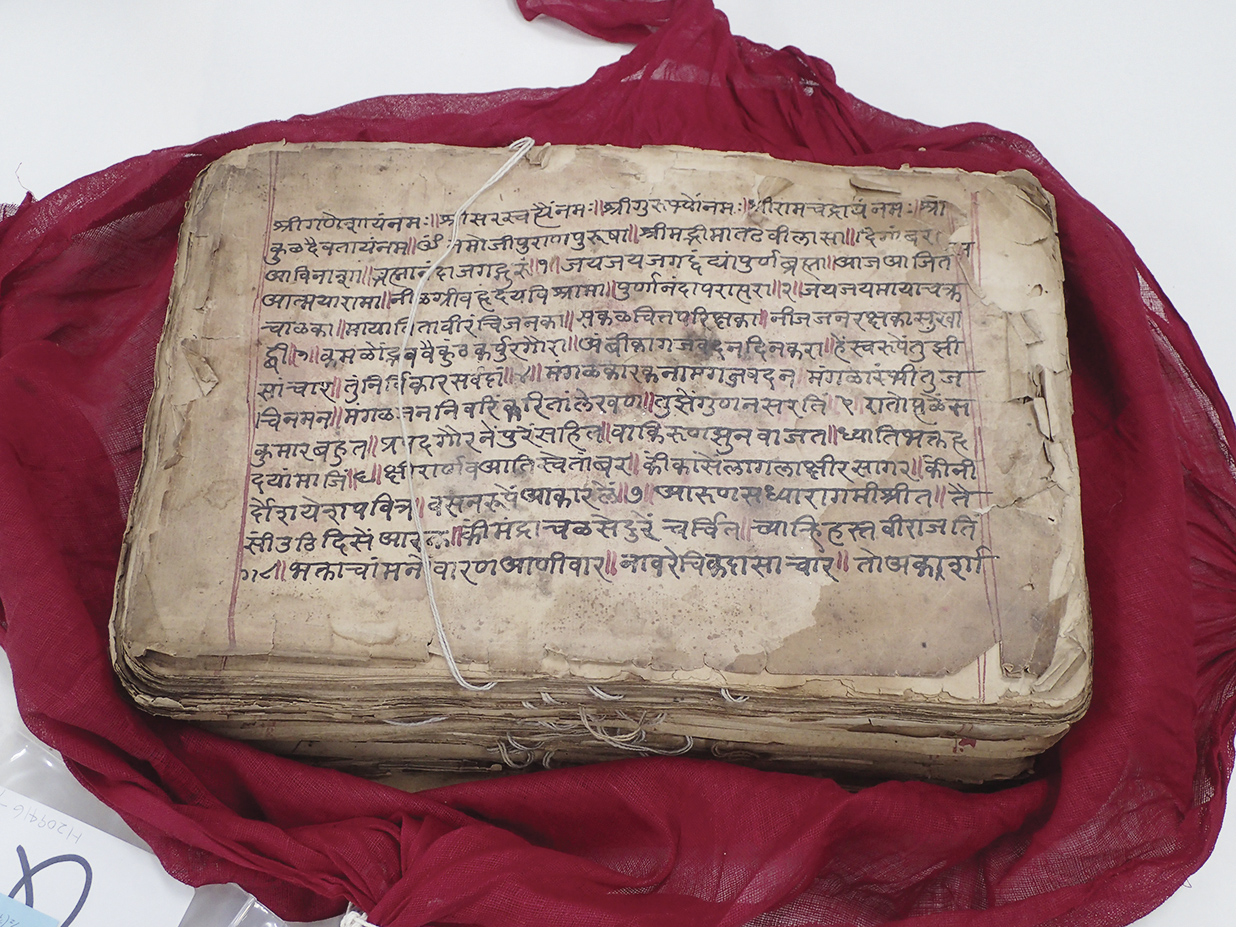
In the west, the spread of paper from China to Samarkand in Central Asia during the latter half of the eighth century (Samarkand paper) and its subsequent spread are significant aspects of paper’s history. This paper was used locally and in the Islamic cultural sphere as a substitute for the parchment used for the official Qur’an, as well as for miniatures with intricate drawings and gold-colored expressions, such as valuable books. After the Samarkand paper, it is believed that the spread of paper became the origin of paper in Europe, but there are many unknown points. Particularly unknown is its relationship to the era of paper manufacturing.
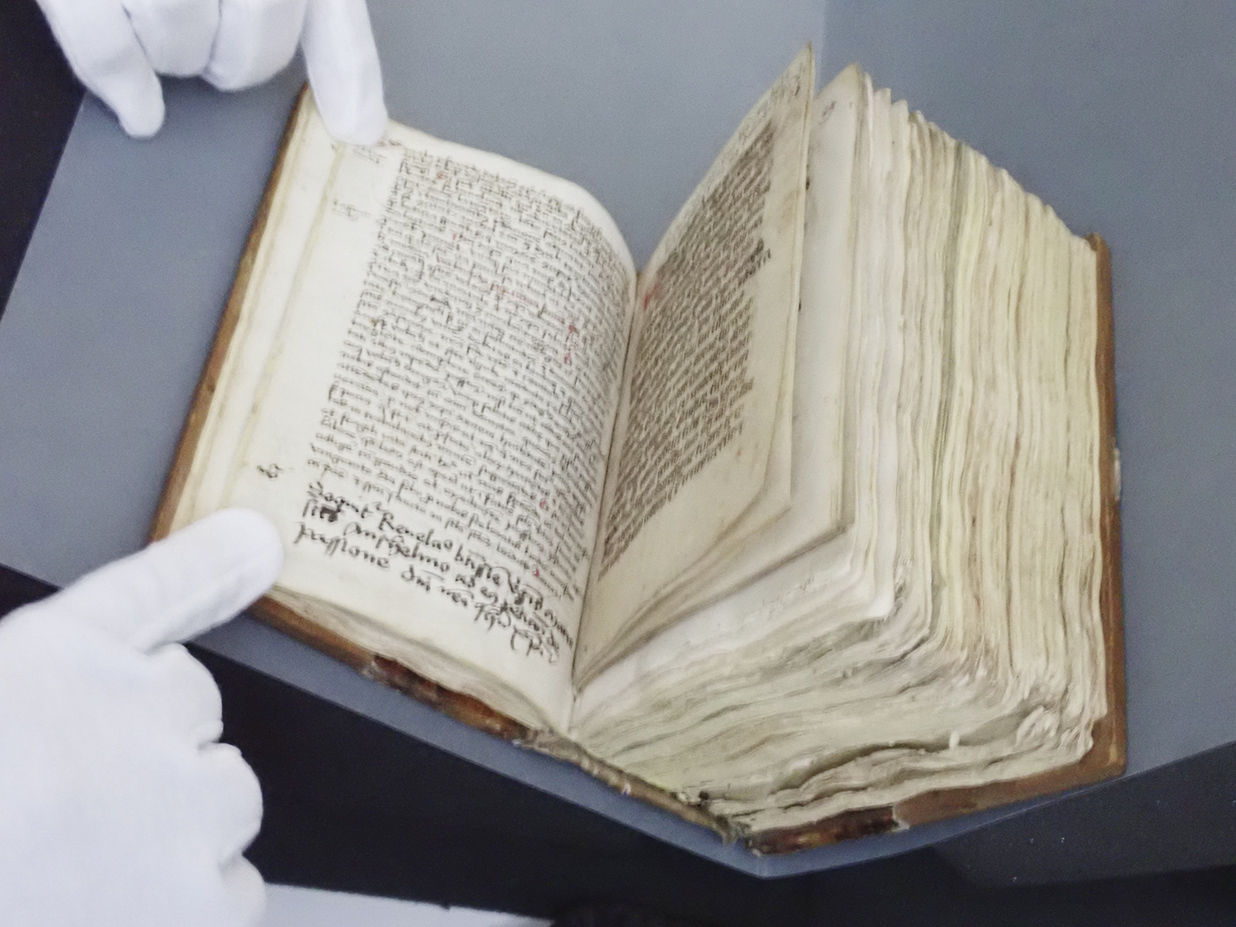
For important historical assets, the rule «non-destructive and non-contact» applies._There is a diversity of paper manufacturing techniques in various regions of the world, which reflects the essence of culture. The artistic expressions (writing, drawing, etc.) created on paper have developed and evolved in tandem with papermaking technology. Even after the destruction of the ancient civilization, these paper cultural artifacts have been guarded, passed down, and preserved with great care. Paper transcends time and space, allowing us to relearn numerous aphorisms.
However, the rule «Non-destructive and non-contact» applies to valuable cultural assets, even if they are significant research works. Researching numerous cultural objects without being able to identify the type of paper used is a challenging issue on a global scale.
Connection of Paper Propagation_By observing numerous papers, we hope to confirm the distribution’s transition or connections.
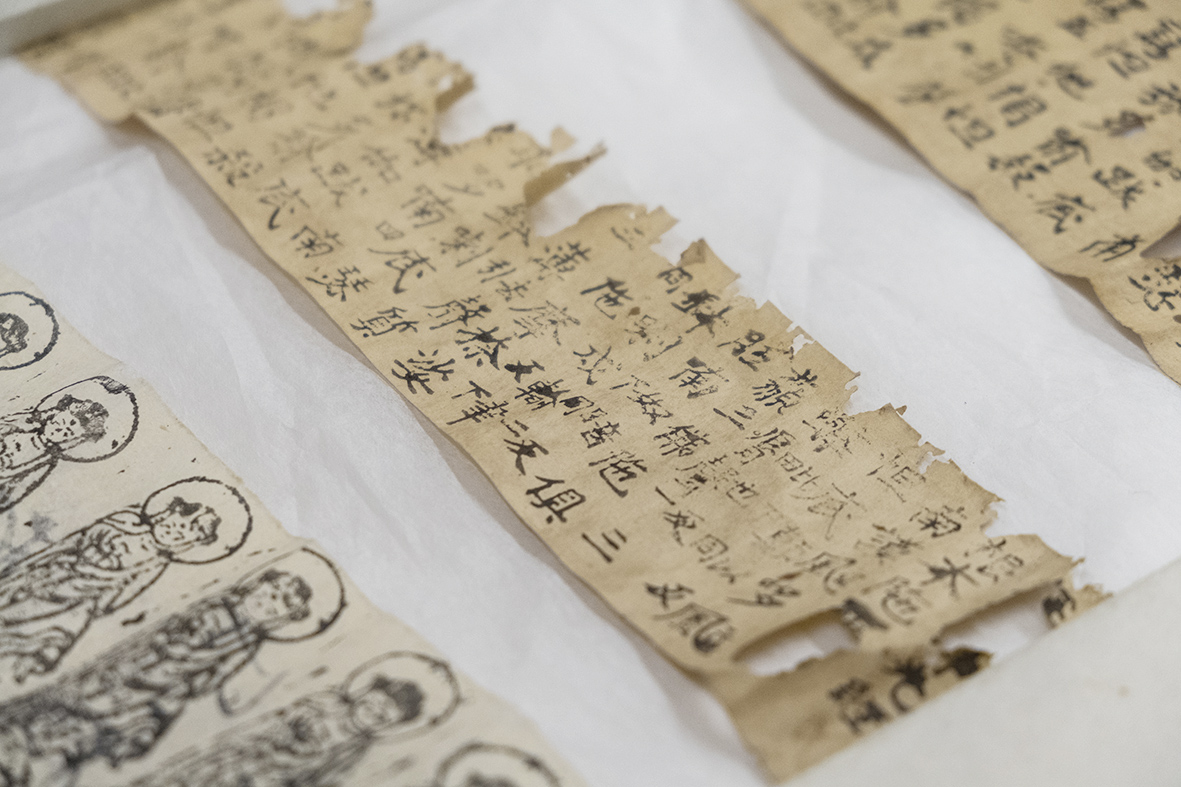
There is considerable ambiguity regarding the distribution of paper in various Eurasian regions. Throughout the course of human history, paper culture has been eradicated and reborn alongside the rise and fall of ethnic groups. After papermaking ceased, research stagnated and knowledge of papermaking techniques and methods as a whole dwindled, so research is frequently based on legend. Japanese Washi and other Shosoin documents are among the few instances that can be dated back to 1300 years ago.
Consequently, there are numerous unexplained aspects of paper culture, but research to date has not tested established theories, and a substantial number of samples remain unconfirmed.
What method is used to conduct reconnaissance?
Initially, numerous images of paper fibers are captured with a simple macro photograph taken with a consumer digital camera. Deep learning is then used to identify the properties of the same or similar paper through image analysis. Various observations and measurements are made, and the results of the complex analysis are correlated with those of the simple macro photographs. Therefore, we developed a system that, from a simple macro image, can identify
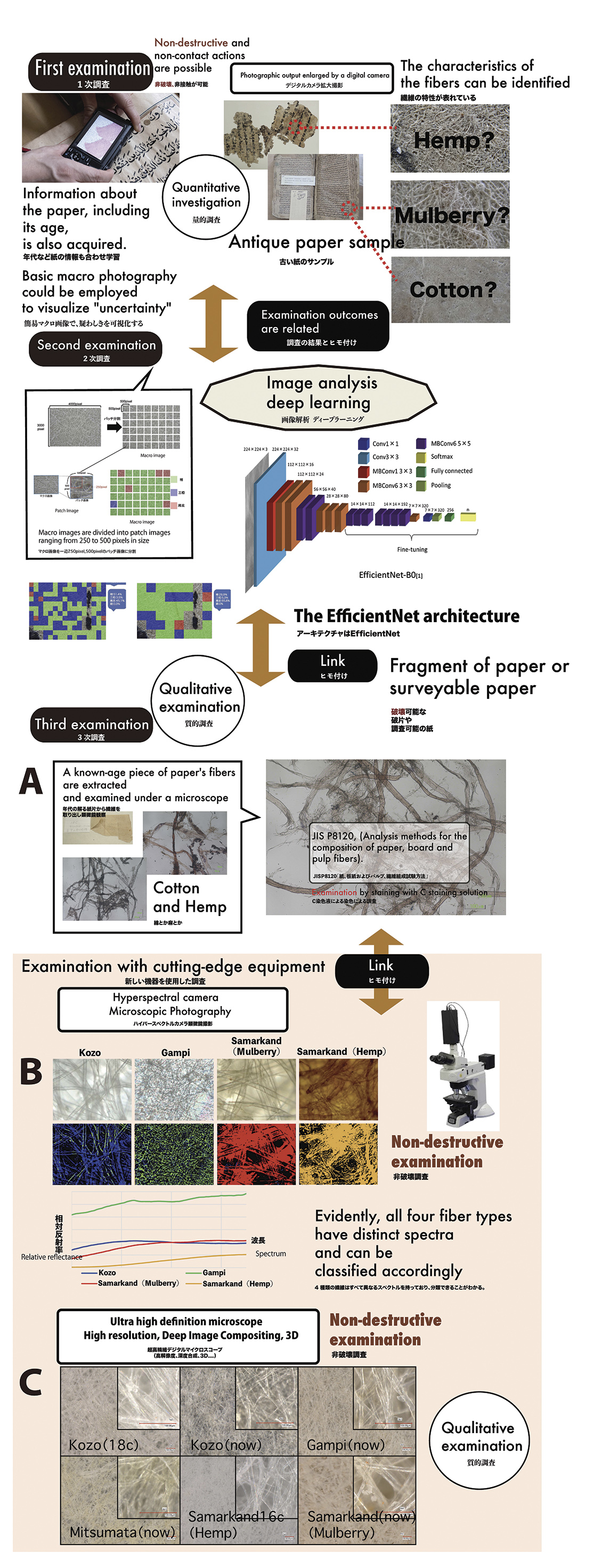
the paper’s material, origin, manufacturing year, manufacturing method, etc.
This is the same technology as facial recognition, which you employ on a daily basis to distinguish yourself from others around the world.
Methodology for locating papers of questionable age
In this study, we intend to investigate a methodology that refers to a large number of papers through a quantitative investigation employing simple macro images and first visualized through the use of Artificial Intelligence (AI), which appears to contradict the accepted theory.
Due to time and financial constraints, it is impossible to examine exhaustively the countless unaudited papers that exist around the world. However, when it becomes a significant cultural asset, it is nearly impossible to extract the fibers, let alone touch them.
First, we intend to develop a method by which different papers from around the world can be identified and their similarity to other paper fiber data can be determined with a high degree of certainty using simple macro photography with a consumer digital camera.
The [First examination] is a quantitative investigation involving visual observation and simple macro photography of paper of known ages to collect as many images of fibers and paper information as possible and build a database for training AI.
In the [Second examination], the potential properties of the paper contained in the image data are analyzed using deep learning, categorized, and visualized according to their various types.
The [Third Examination] is qualitative research that uses optical examinations to extract the fibers and non-destructive examinations with cutting-edge technology to accurately identify the raw materials, fiber properties, and impurities of the examined paper. In other words, it is an investigation to determine the correct paper fibers.
There are three qualitative research methods:
A. Using an optical microscope and the JIS P8120 (Paper, Board, and Pulp Fiber Analysis Method) method for analyzing fiber properties and impurities, damaged or naturally fallen paper fibers were collected and analyzed to determine fiber properties and impurities.
B. A hyperspectral camera attached to a microscope is used.On the image data, spectral separation is performed (points). In addition to visible lightseparation is performed (points). In addition to visible light (red, green, and blue, or RGB), non- visible light with shorter wavelengths can be observed.
C. An ultrahigh-definition microscope is used to observe details. Utilized features include high resolution, deep image composition, and element measurement.
The conventional method, A, is destructive because it extracts the fibers. B and C are non-destructive surveys utilizing state-of-the-art equipment that are considered new techniques to be investigated in the future.
Deep learning is used to connect and learn the images and data from these [first, second, and third examination].
These methods have the potential to enable nondestructive, in-depth analysis of paper using
macro photography with a standard digital camera.
If this methodology can be applied globally, it could be a scientific approach that can unearth history that has been buried in the past due to unrevealed facts or competing historical interpretations.